Book of Life
Book of RevelationThe Book of Life is the decisive register in the study’s account of allegiance and final judgment: the dead face judgment according to recorded deeds, but anyone whose name is not found in this book is cast into the Lake of Fire. Its appearances connect a present test of worship under the beast with the final reckoning after the thousand years, making the book more than one item in the vision’s inventory: it marks the difference between inclusion in life and condemnation.
Identity and First Appearance
In the passage on the beast’s authority, the Book of Life is described as belonging to the Lamb, Jesus Christ, who was slain from the foundation of the world. The study presents the people who worship the beast as those whose names are not written there. The book thus enters the argument as a record of belonging, set against the beast’s demand for universal worship. The passage does not explain how names are entered or removed; its stated contrast is between those who worship the beast and those whose names are absent from the Lamb’s book.
That first reference gives the register a role before the final judgment scene. It identifies the worshipers of the beast by an absence in the book, linking their earthly allegiance to their ultimate standing. The study does not treat this as a complete account of every person’s response or fate at that point. Instead, it draws on the later vision to explain the consequence attached to not being found in the book.
The Books at the Great White Throne
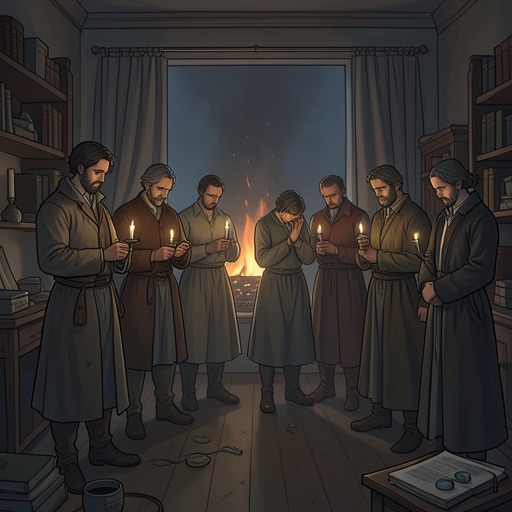
In the account of the Great White Throne, the dead, both small and great, stand before God as the books are opened. The vision distinguishes those books from another book, the Book of Life. The dead are judged according to their works as recorded in the books; the Book of Life is separately named, and the closing verdict turns on whether a person’s name is found in it. This distinction matters: the scene presents a record of deeds and a register of names, not a single undifferentiated ledger.
The scope of the judgment is made concrete by the vision’s sequence. The sea gives up its dead, and death and Hades deliver up the dead in them; each is judged according to works. Death and Hades are then cast into the Lake of Fire, which the passage identifies as the second death. The judgment of the dead culminates in the further statement that whoever is not found written in the Book of Life is also cast into the Lake of Fire. The book therefore supplies a criterion named at the final verdict, alongside the account of works that governs the judgment.
Place in the Study’s End-Time Sequence
The author locates this judgment after the thousand years of peace and after Satan is cast into the Lake of Fire. In that order, the Book of Life belongs to the last universal reckoning, when those who have died are brought before God. The study emphasizes that neither the sea nor death nor Hades retains the dead beyond that moment: all are delivered up, and the opened records precede the verdict. The book’s appearance is therefore bound to the completion of the end-time sequence, rather than to an isolated judgment of the beast’s worshipers alone.
The study also makes an explicit theological application: without forgiveness through the blood of Jesus Christ, a person’s name would not be in the Lamb’s Book of Life and that person would be condemned. This is the author’s explanatory claim about the vision, not a procedure detailed in the passage itself. Read alongside the earlier reference to the beast’s worshipers, it gives the book a connective function across the study: it links the question of allegiance during the end times to the final question of whether a name is present when judgment is complete.
Meaning and Limits of the Image
The text supplies no physical description of the Book of Life beyond its being opened and consulted in the judgment scene. Its importance comes from what its opening establishes: the dead are judged, their works are considered, and the absence of a name has an expressly stated consequence. The study preserves the distinction between the two kinds of record instead of reducing the scene to a judgment by deeds alone or treating the register as interchangeable with the books of works.
The book also gives the study’s final warning a precise focus. Its account does not claim that the passage explains every detail of how a name is recorded; rather, it directs attention to the final distinction the vision makes. The opened books disclose deeds, while the Book of Life determines whether a name is found. In the author’s interpretation, that contrast joins the present question of faithfulness to the ultimate outcome of the dead, and makes the register a central image of inclusion, judgment, and the second death.